A car that feels fine around town can still become annoying, uncomfortable, or even concerning at highway speeds. At 25 or 35 mph, everything seems normal. Then you get on the highway, and the steering wheel starts trembling, the seat starts buzzing, or the whole car shakes, only to disappear as soon as you slow back down.
That speed-related pattern is important. Some problems only show up when the tires, wheels, bearings, steering parts, and drivetrain are spinning faster and carrying more force. Around town, the issue may be too small to feel. At highway speed, the same small imbalance or worn part can become very noticeable.
Highway Speed Changes The Forces On Tires And Wheels
The faster a tire spins, the more any small problem gets amplified. A tire that is slightly out of balance may feel normal at neighborhood speed, then shake the steering wheel at 60 mph. A wheel with a small bend may roll acceptably in town, then send a vibration through the vehicle once speed builds.
Highway vibration often comes from rotating parts. Tires, wheels, hubs, axles, driveshafts, and bearings are all moving quickly. If one of them is out of round, damaged, loose, or not spinning evenly, the car can start shaking in a narrow speed range.
That is why drivers often say, “It only happens between 55 and 70.” The problem has reached the speed where it becomes strong enough to feel.
Tire Balance Is Common, But Not The Only Answer
Tire balance is one of the most common causes of highway vibration. When the weight around a tire and wheel assembly is uneven, the assembly does not spin cleanly. Balance weights are added to correct that uneven weight.
A balance problem often shows up as a vibration at a certain speed, then may fade above or below that speed. If the shake is felt mostly in the steering wheel, the front tires are often involved. If it is felt more through the seat or floor, the rear tires may deserve closer attention.
Balance should be checked, but it should not be treated as the only possible cause. A damaged tire can still shake even after being balanced. A bent wheel can accept weights and still not roll straight. A worn suspension part can make a small tire issue feel much worse.
Tire Damage Can Hide At Low Speed
A tire can look decent from a few feet away and still be the source of a highway shake. Internal belt problems, flat spots, uneven tread wear, cupping, sidewall damage, or an out-of-round shape can all create vibration.
Cupped tires are a common example. The tread develops uneven high and low spots, often due to worn shocks or struts, alignment problems, or lack of rotation. At low speed, the tire may only sound slightly rough. At highway speed, it can hum, roar, or shake.
Flat spots can occur when a vehicle sits for a long time, after hard braking, or due to tire construction issues. Some flat spots improve as the tire warms up. Others stay. Tire inspection should include the full tread surface, inner edges, sidewalls, and how the tire spins, not just tread depth.
Bent Wheels And Wheel Bearings Can Add To The Shake
A wheel does not have to look badly damaged to cause a vibration. A pothole, curb hit, or road debris can bend the inside lip, making it hard to see. The tire may still hold air, but the wheel may wobble slightly as it rotates.
Wheel bearings can also create highway symptoms. A worn bearing may begin as a humming or growling noise that gets louder with speed. In some cases, it can also create vibration or roughness. Bearing noise may change when turning because the vehicle’s weight shifts from one side to the other.
Bent wheels and wheel bearings are worth checking when vibration is accompanied by noise, uneven tire wear, air loss, or a rough feeling that persists after balancing.
Steering And Suspension Wear Can Make Vibration Worse
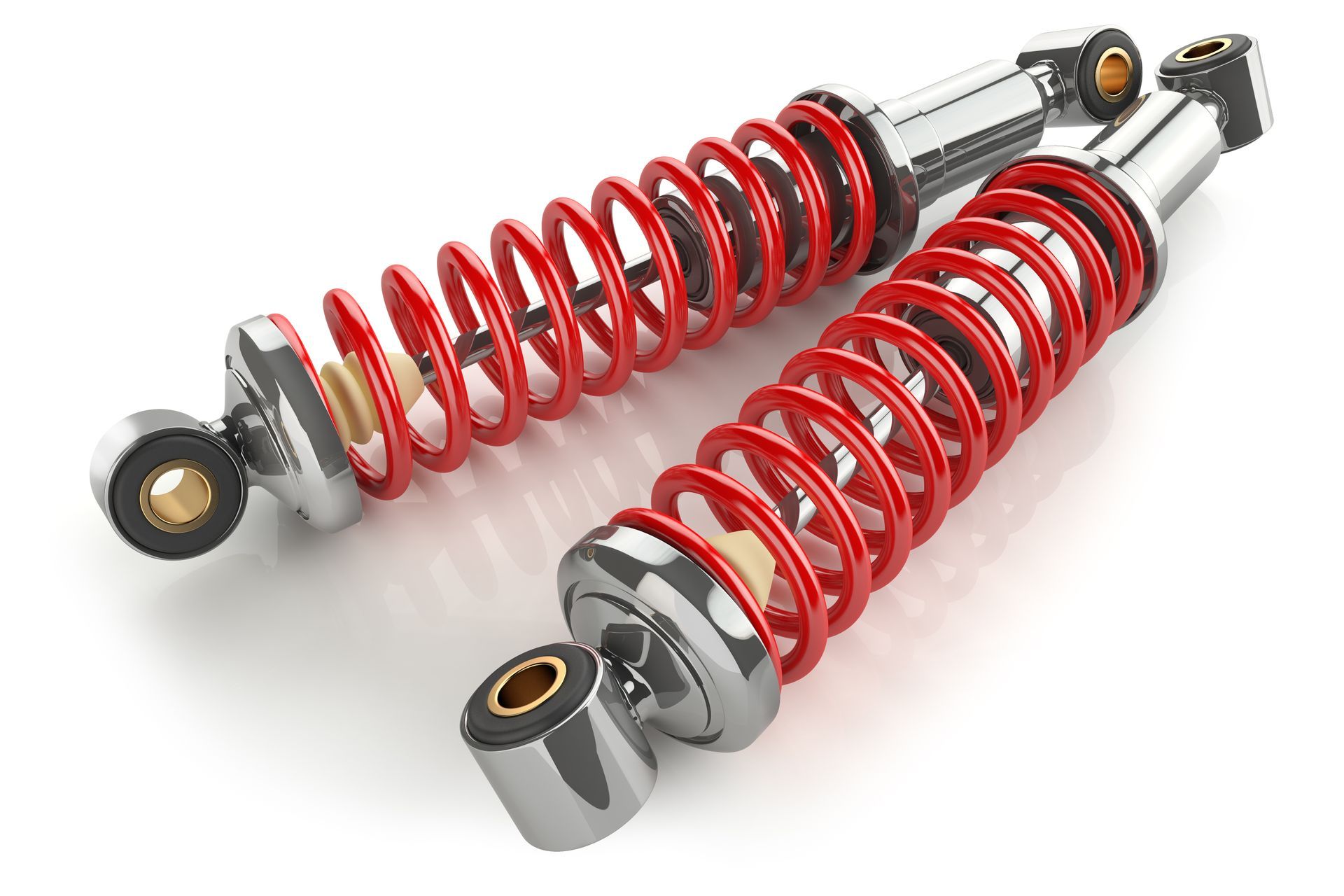
The tire and wheel may initiate the vibration, but steering and suspension components determine how much of it reaches the driver. Tie rods, ball joints, control arm bushings, shocks, struts, and wheel bearings help keep the tires controlled against the road.
If those parts are worn, the vehicle may feel stable around town but loose or shaky at highway speed. A small imbalance that should be minor can turn into a larger steering wheel shake because the front end is no longer holding everything firmly.
Suspension wear also creates tire wear, which then creates more vibration. That cycle can keep repeating unless the cause is found. Regular maintenance helps catch loose parts and uneven tread before the vehicle starts feeling unsettled on the highway.
What The Vibration Pattern Can Tell You
The details of the shake can help narrow the direction of the inspection.
- Steering wheel shake at highway speed often points toward front tire balance, front tire damage, a bent front wheel, or looseness in the front steering and suspension.
- Seat or floor vibration can point more toward the rear tires, rear wheels, or drivetrain parts, or to a vibration traveling through the body from the back of the vehicle.
- A shake that appears after tire rotation may mean one tire already had a wear or shape problem, and moving it to a different position made the symptom easier to feel.
- A vibration that worsens while braking is different from one that occurs while cruising, and it can point to rotor problems, brake wear, or front-end movement under braking load.
- A vibration accompanied by a humming or growling noise may indicate tire cupping, wheel bearing wear, or another rotating part that becomes louder as speed increases.
- A shake after hitting a pothole or curb should be checked for bent wheels, tire damage, alignment changes, and stressed suspension parts.
These clues help the technician start in the right area instead of replacing parts that only look suspicious.
Do Not Ignore A Shake That Comes And Goes
A highway vibration may not feel urgent if the car behaves normally in town, but it should not be ignored. Shaking can wear tires faster, stress suspension parts, make steering less comfortable, and hide a developing safety issue.
A proper check may include tire balance, tire runout, wheel runout, tread inspection, wheel bearing checks, steering and suspension checks, alignment readings, and a road test. The goal is to find out why the shake appears at speed, not just cover it up for a few days.
The sooner the cause is found, the better your chance of saving the tires and preventing the vibration from spreading to other parts.
Get Highway Speed Vibration Diagnostics In Lawrence, KS, With GenAuto
If your car shakes at highway speeds but feels fine around town, GenAuto in Lawrence, KS, can check the tires, wheels, balance, steering, suspension, bearings, and related parts at our two Lawrence locations.
For highway speed vibration diagnostics before the shake gets worse,
contact us to schedule an appointment.